Navigating the thermal instability and energy intensity of PAN precursor conversion through synchronous industrial AI.
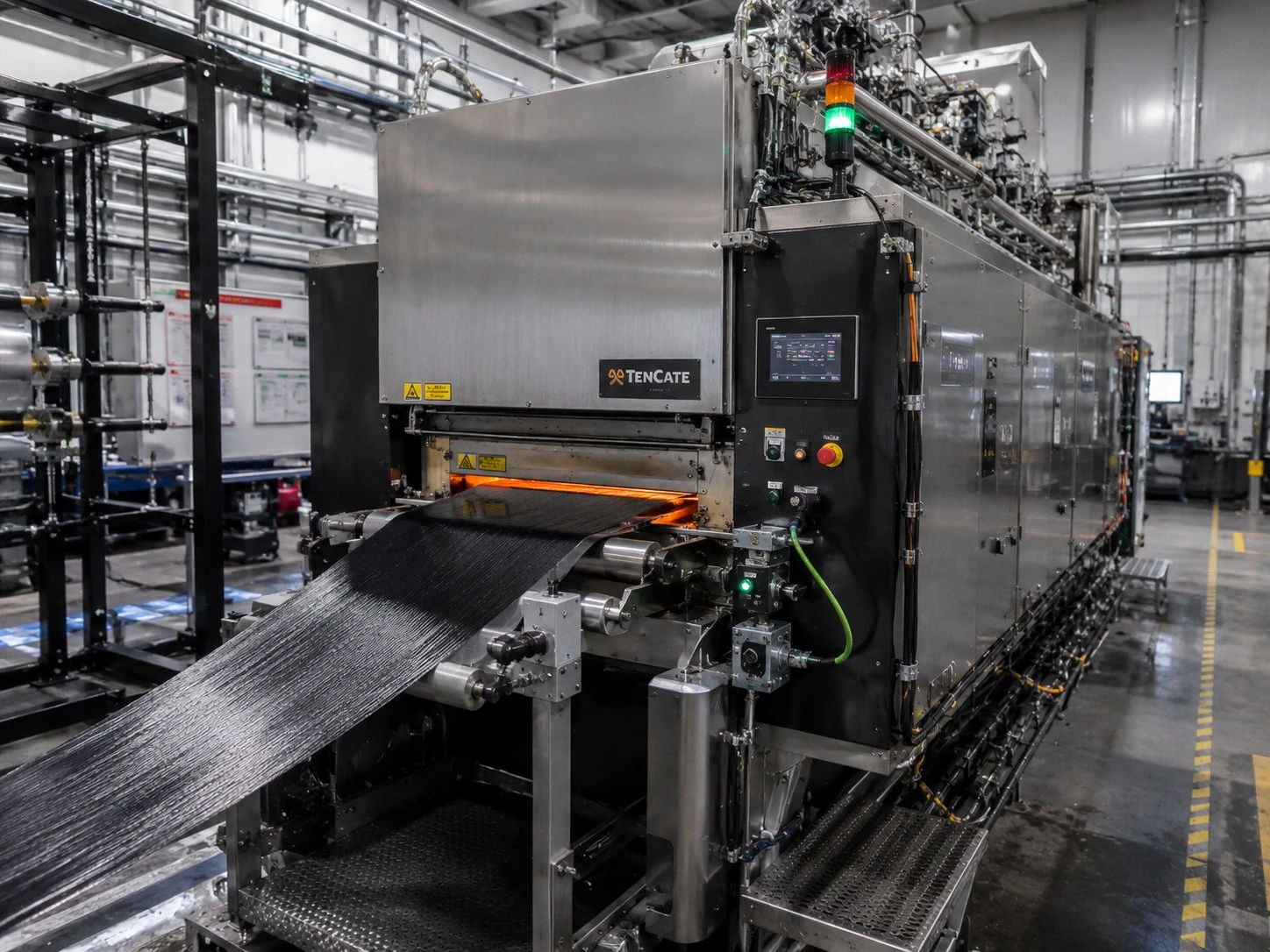
PAN (Polyacrylonitrile) accounts for over 90% of global carbon fiber. The conversion is a multi-stage thermochemical process where throughput and profit are gated by massive energy sinks.
PAN precursor dominates total cost—from 49.6% (Industrial) to 76.6% (Aerospace).
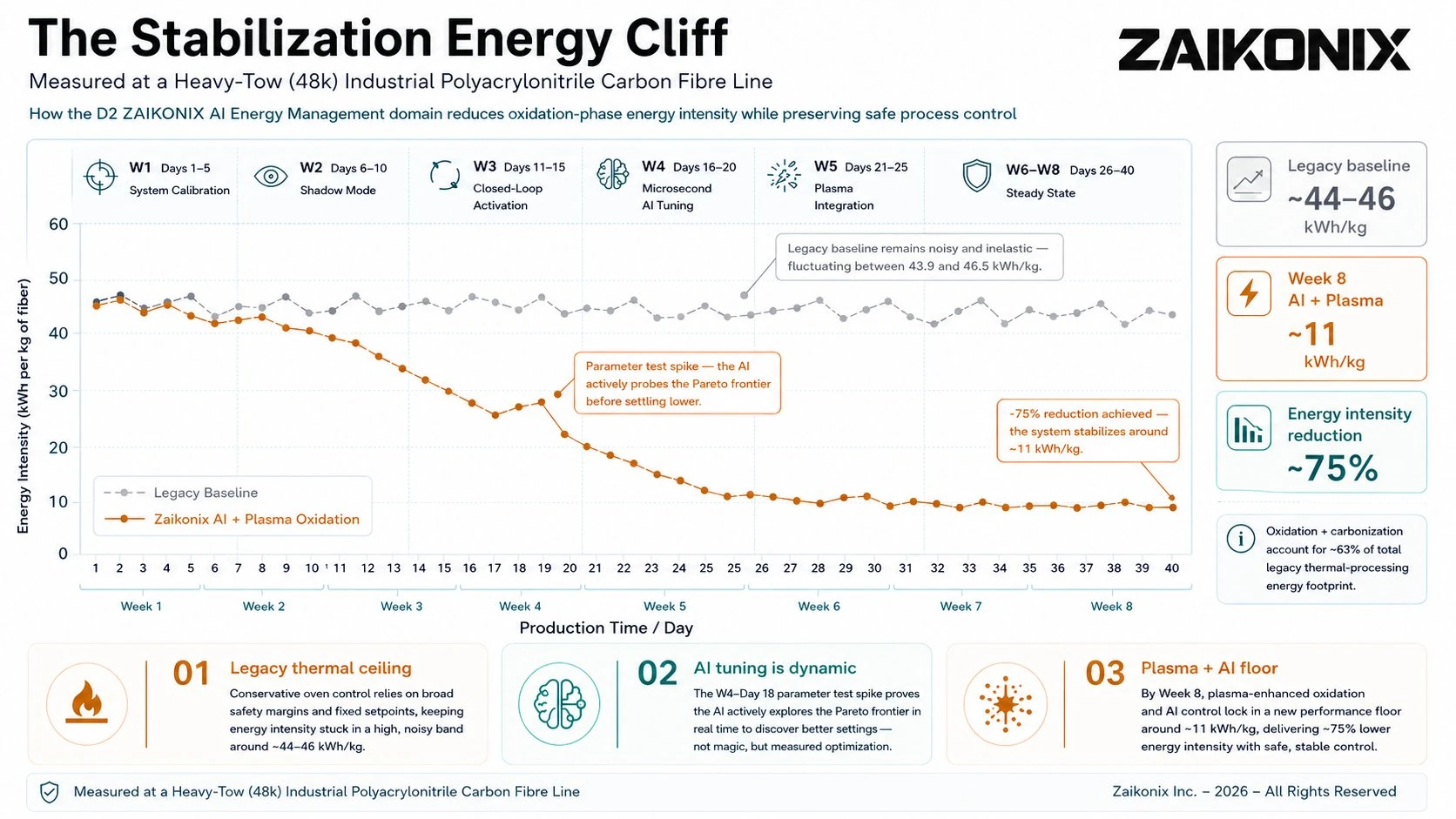
Oxidation/Carbonization consumes ~63% of energy. Intensities spike to >319 kWh/kg.
Residence times of 60–120 min in stabilization ovens create a hard ceiling on output.
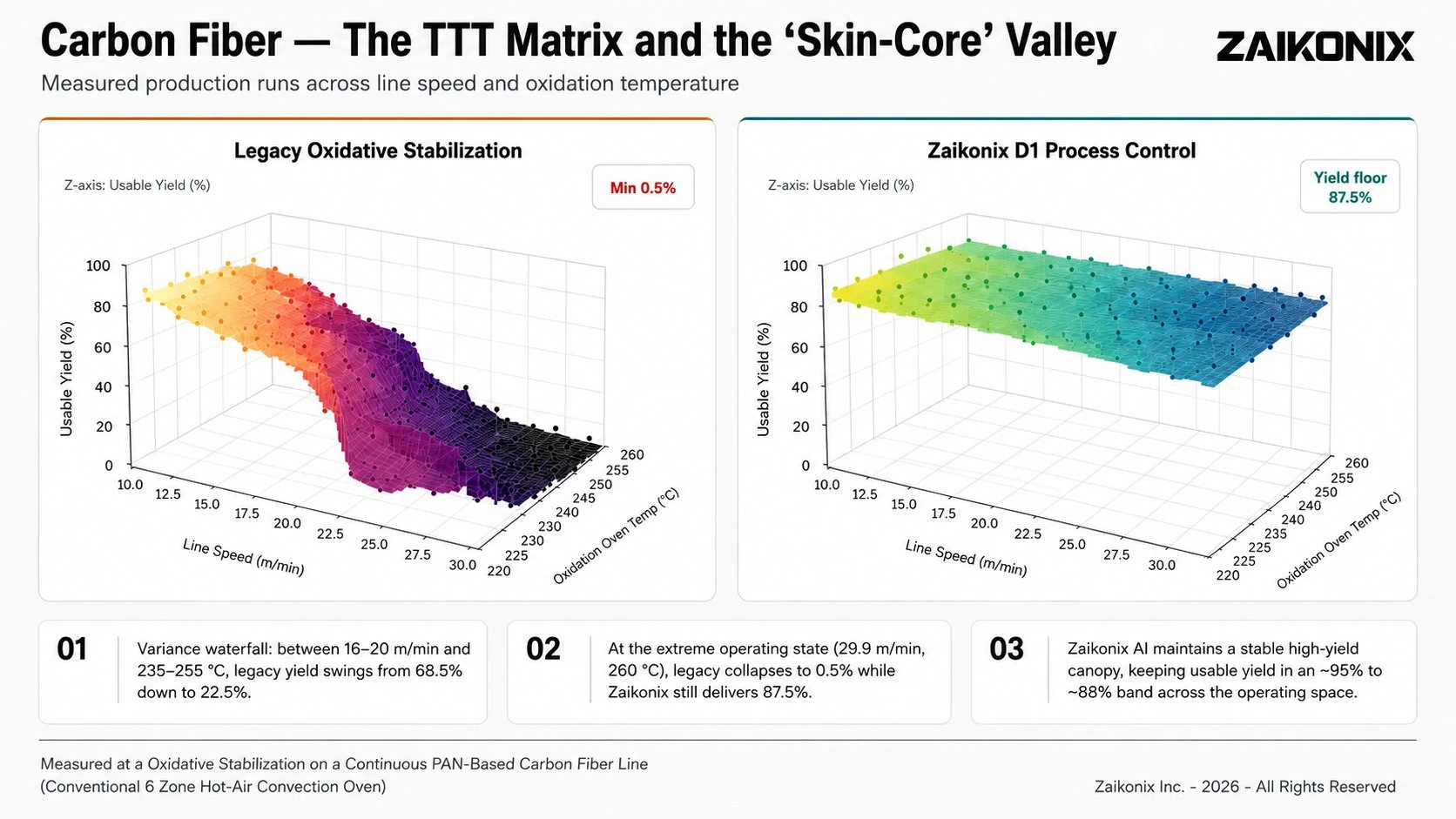
Stabilization is governed by a hyper-dimensional Temperature–Time–Tension (TTT) matrix. In this environment, legacy fixed-setpoint control is risky.
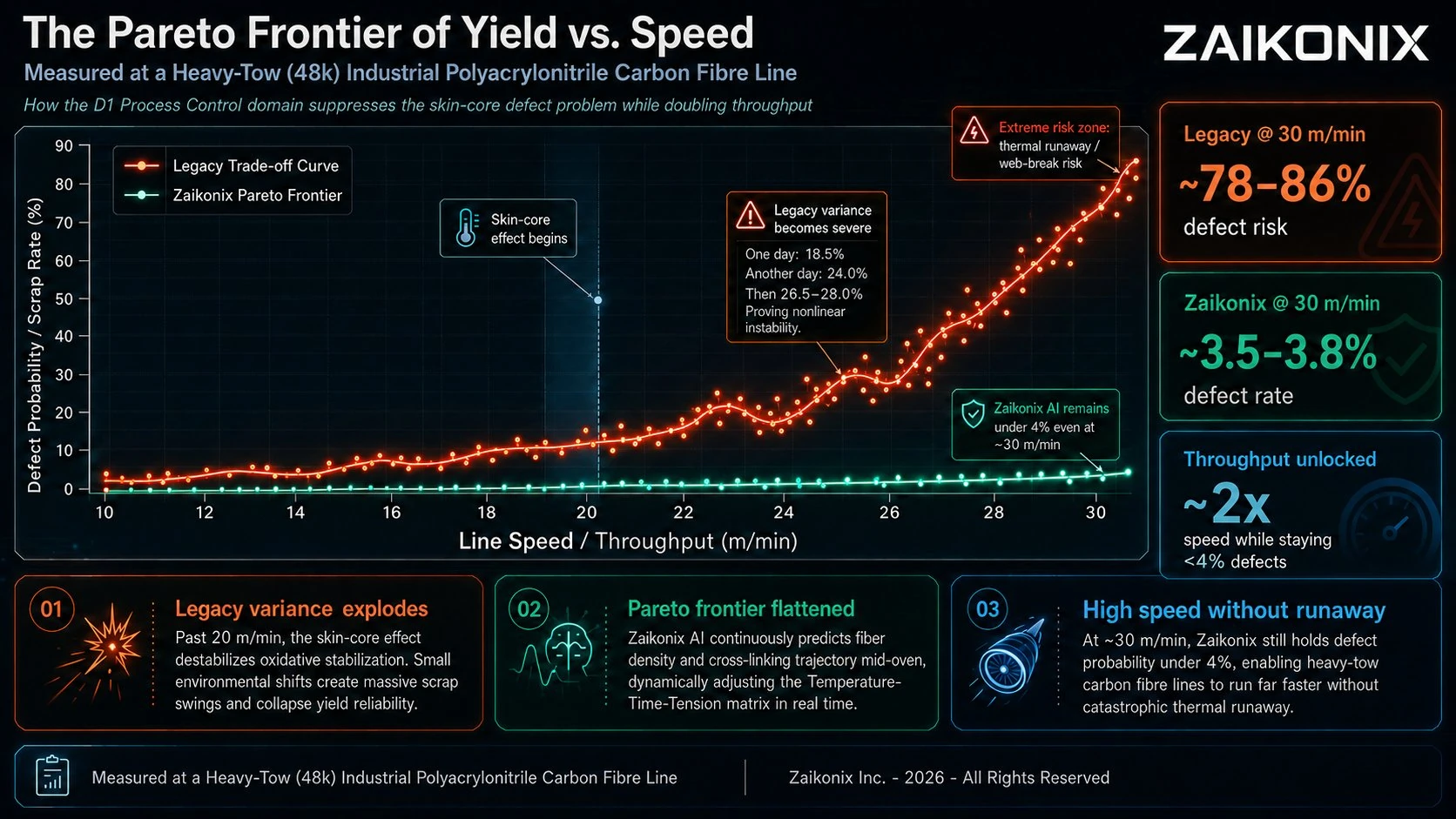
Thermal Runaway: Uncontrolled exotherms incinerate batches instantly. Lines must run conservatively slow.
Environmental Variance: Humidity can swing usable yield from ~60% to zero.
Skin-Core Fracture: Improper oxidation seals the skin, causing core volatilization and fractures.
The Control Gap: Plasma oxidation cuts time to 20–30min, mandating millisecond inference.
AI adapts Temperature and Tension based on live telemetry, neutralizing variance before it manifests as a defect.
In legacy systems, increasing throughput inevitably collapses yield. ZAIKONIX shifts the entire frontier, decoupling speed from instability.
ZAIKONIX AI Energy Management reduces oxidation-phase energy intensity by 75% while preserving safe process control.